
Exhibition Review by Katelyn Halter
Published April 2, 2026.
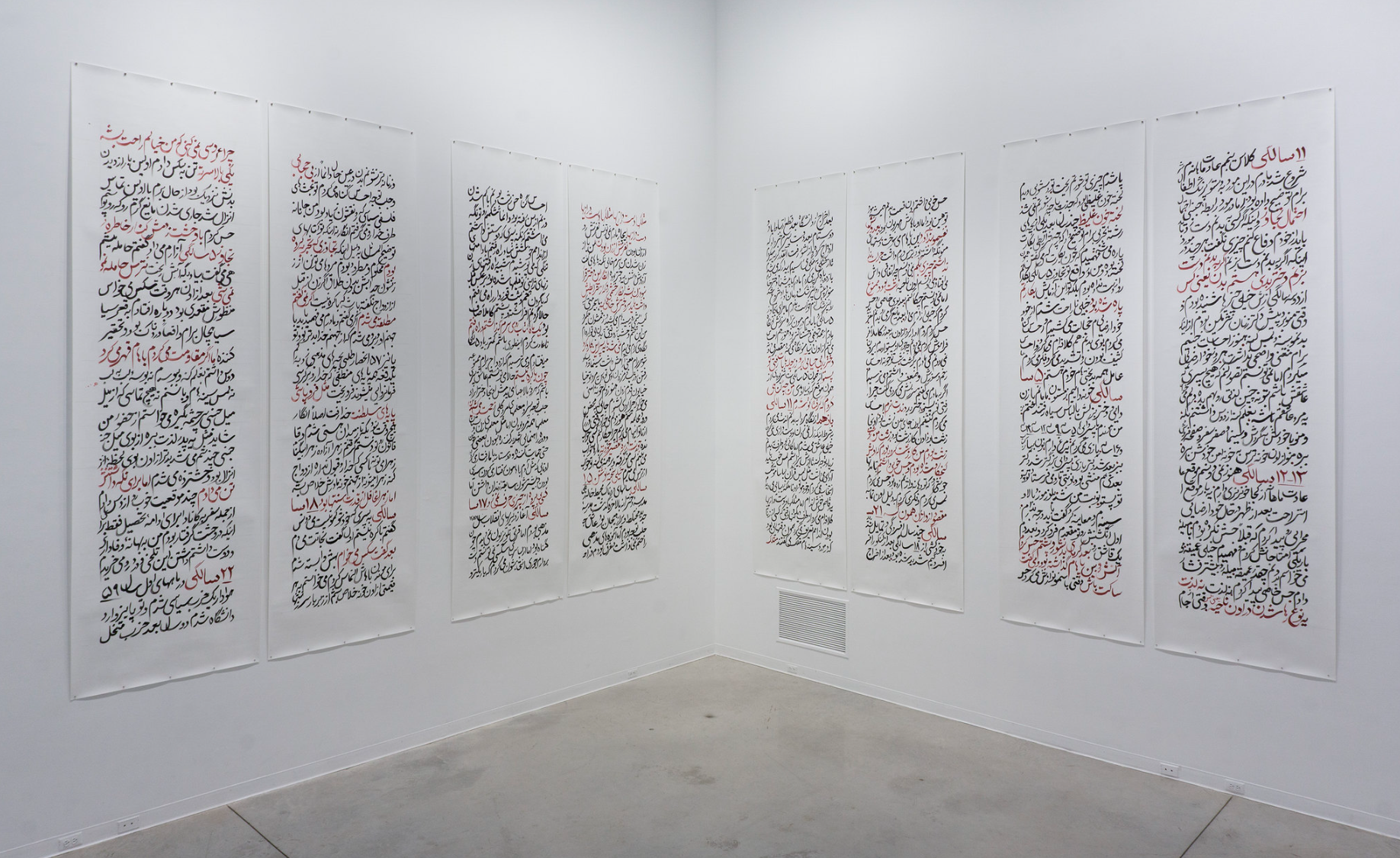
Grounding: States of Gender was a January 2026 exhibition curated by Soheila Esfahani that featured the work of artist Gita Hashemi. Located in Western University’s artLAB gallery, Grounding: States of Gender was a remarkable exhibition featuring a hauntingly beautiful large-scale body of work that reproduced the autoethnography of Zahra, an Iranian woman and victim of gender-based violence.
The initial creation of Grounding (the live-streamed 8-day durational performance) in February of 2017 is largely attributed to the #MeToo and #WomenLifeFreedom movements, both of which gained substantial popularity around the world— the latter especially in Iran.
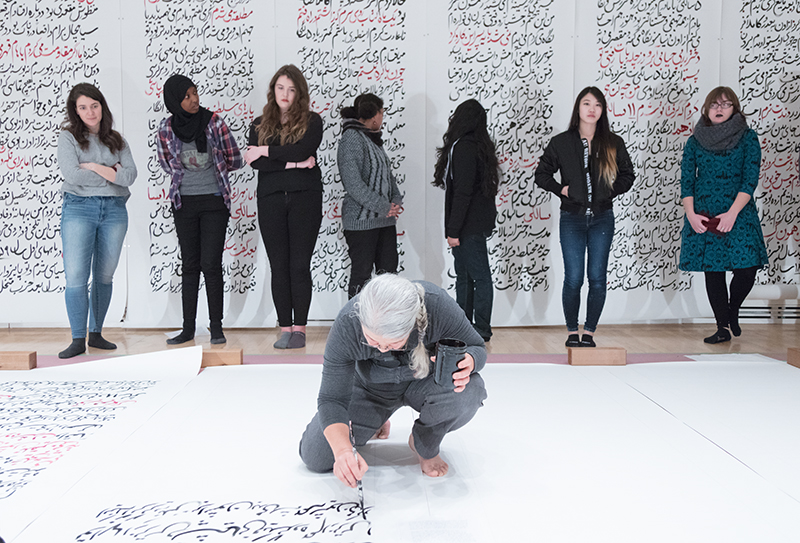
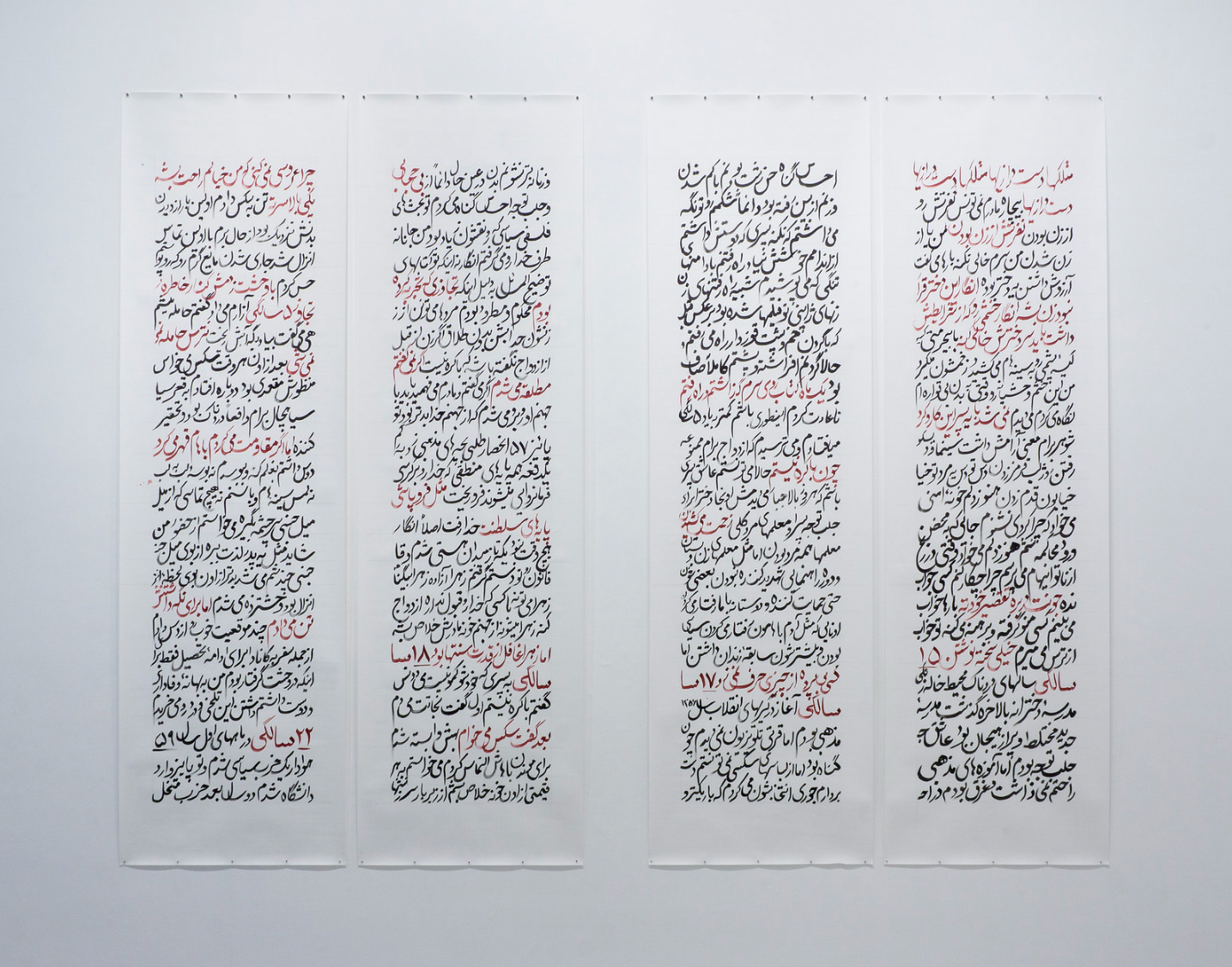
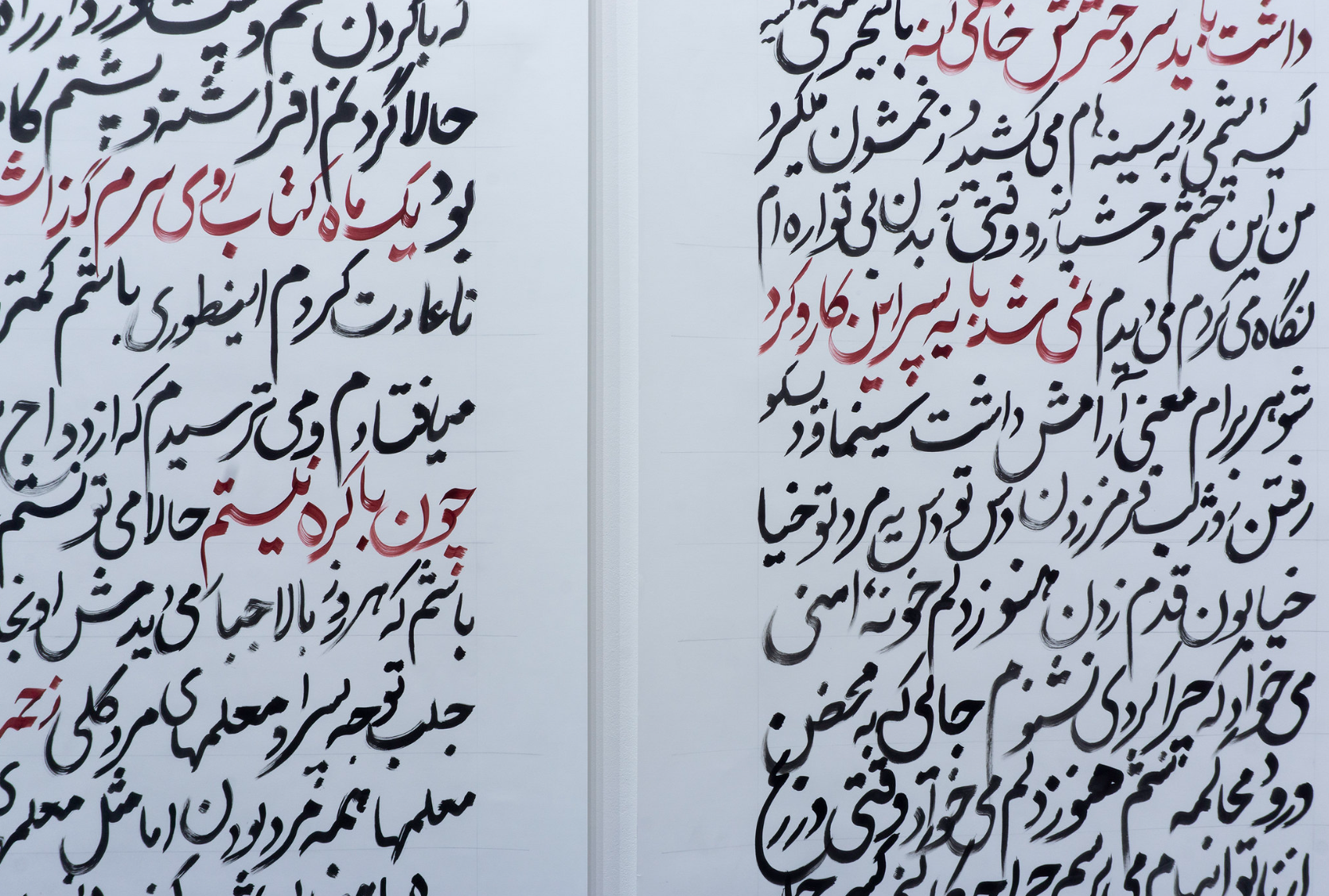
When the viewer enters the gallery in which Grounding: States of Gender (2026) is presented, they are immediately immersed in the space. Hung on the walls are 22 massive scrolls that almost span floor to ceiling in height and are decorated in red and black Persian calligraphy. What is written in this calligraphy is a direct reproduction of an autoethnography written by a woman named Zahra. The small portions of red calligraphy are excerpts from the text that impacted Gita most upon her reading of it. There are only a few excerpts on each massive scroll that are this brilliant shade of red, making them stand out when compared to the rest of the calligraphy that is written in black ink. A large video is projected onto the floor in the centre of the exhibition space. This video plays on loop, and documents the first three days of the aforementioned initial creation of Grounding. The video plays at 2x the normal speed and displays Gita meticulously painting the calligraphy of the first six scrolls.
There is a temporary but obvious obstacle to most viewers when first entering the space: the language barrier. The majority of those who view this piece likely do not speak Persian, much less regularly read Persian calligraphy enough to understand what is written on these scrolls. Hashemi, however, has a remedy for this. Tucked away in a small, rectangular alcove to the right of the space is a small coffee table surrounded by cushions. Laid upon the coffee table are three booklets, within them being direct English and French translations of the calligraphy written on the scrolls. It was upon reading the 30 page translation that I truly learned how impactful this work was. The auto-ethnography is raw and unfiltered. Its contents are graphic, but not for the sake of the viewer’s shock or discomfort. It is documentation of gender-based violence and abuse in its purest form: a first-hand account spanning decades of Zahra’s life.
Gender-based violence can, of course, happen anywhere and to any gender, though this exhibition highlights the story of Zahra, an Iranian woman. As previously stated, Zahra’s translated auto-ethnography does not attempt to censor itself or downplay the writer’s experiences for the sake of the reader. It is explicit. It is uncomfortable. Providing the reader with the unfiltered truth and discomfort that comes with being a victim of such unthinkable abuse is how change can be made to protect victims and ensure that their stories of experiencing such violence end with them.
After reading the translated auto-ethnography I was left with a dull, lingering ache in my chest. I was crushed by the experiences Zahra was forced to undergo, but I knew it didn’t just end with her. Her experience is, unfortunately, not uncommon, and that was what made that pain in my chest linger. This exhibition shines a light on the ugly reality that remains so prevalent worldwide, but that so many refuse to acknowledge fully. Not only is the viewer of Hashemi’s work stunned and made uncomfortable by this transcribed account, but they are almost forced to bask in it.
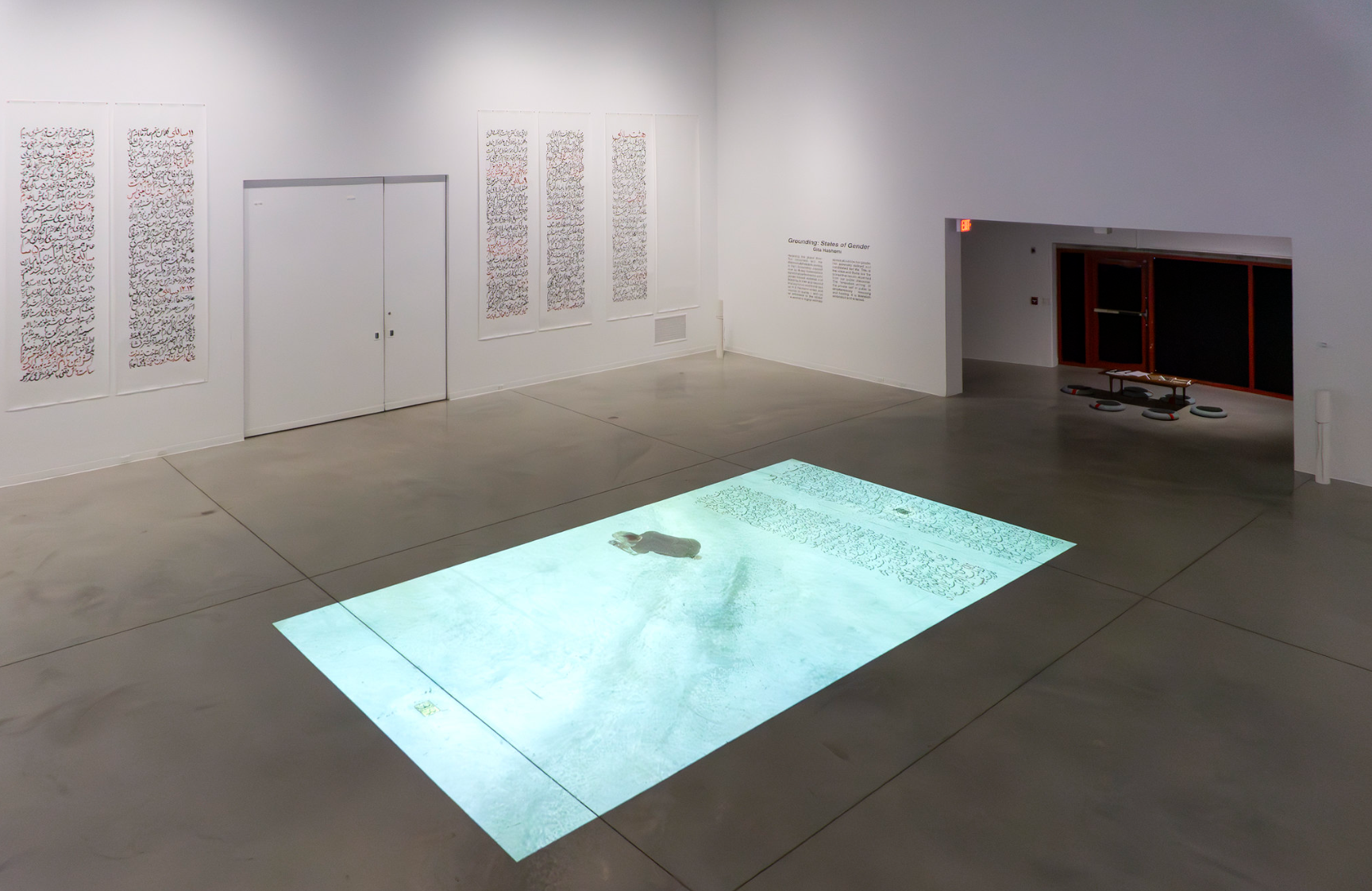
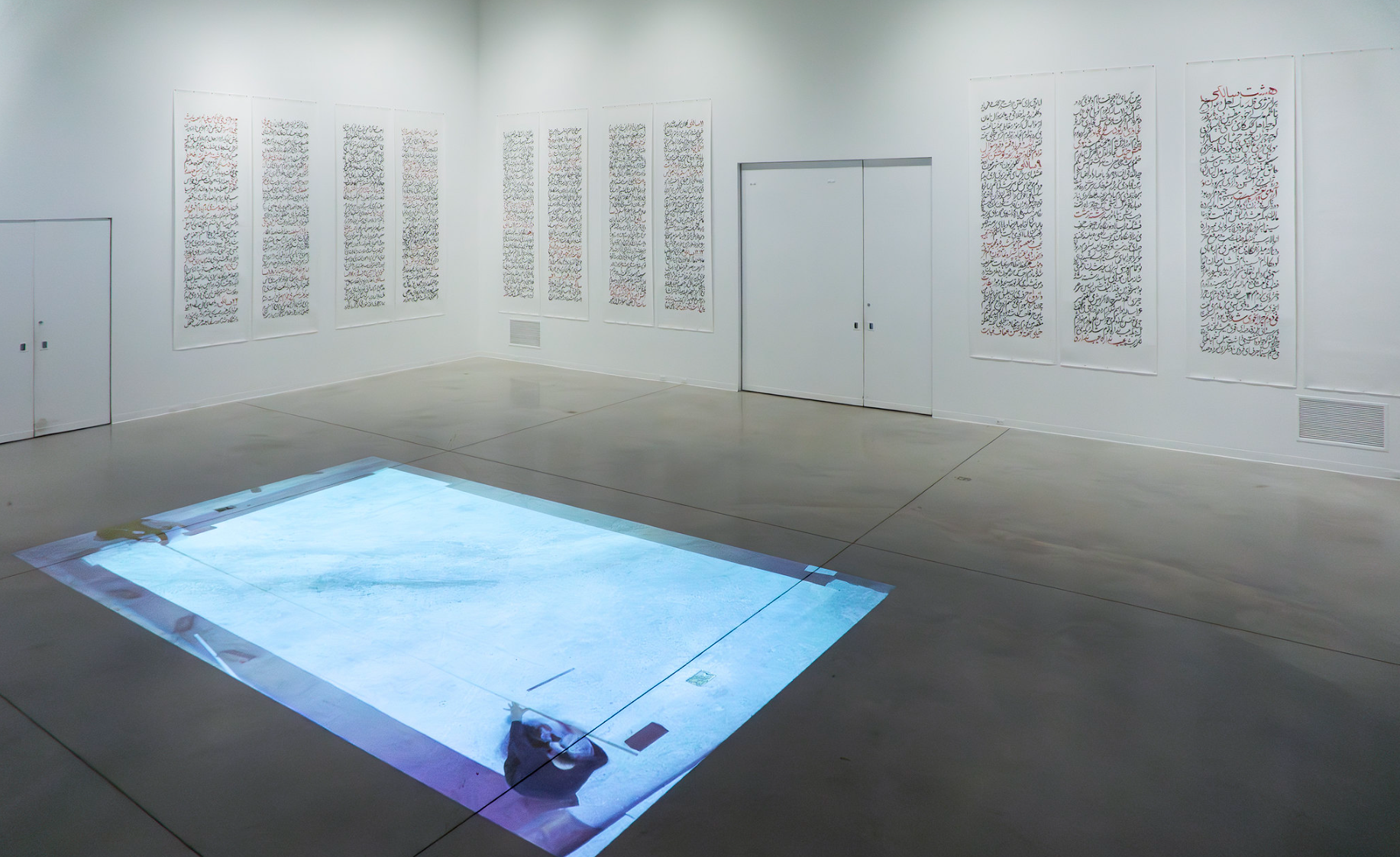
Grounding: States of Gender, curated by Soheila Esfahani and created by Gita Hashemi tells the story of Zahra, a powerful, resilient Iranian woman and survivor of sexual abuse. Zahra is, unfortunately, far from the only victim of gender-based violence, but it doesn’t have to stay that way. When voices like these are heard, artists who create these works are supported, and galleries that facilitate these exhibitions are received positively, a meaningful change can be made. Zahra is not the first victim of this abuse, but with enough awareness, support, and open discussion, she and millions of other women just like her, could be among the last.
Note: Grounding: States of Gender was open for viewing from January 9th-29th. Its opening reception took place on the 8th of the same month from 4-6pm. You can also read more about the project on Gita Hashemi’s website.
—
My name is Katelyn Halter, and I am a 21 year old 4th year student at Western University. I am in the Visual Arts program at Western University and hope to graduate with an Honours Bachelor’s of Fine Arts with a specialization in Studio Arts, and a minor in Art History.
With the social and political climate of today being the way that it is, I believe that self-expression and freedom of speech are of utmost importance. Expression through art is deeply personal, and has the ability to transcend conventional language barriers in a way no other form of media can. It was a great privilege to curate, co-curate, and attend the exhibitions I discussed. I encourage anyone who is able to do the same; visit local exhibitions, support small artists, and perhaps even make art of your own.
 SATELLiTE
You must be logged in to post a comment.